A comprehensive guide
Squats build lower body strength. They support muscle development, reinforce control and underpin athletic performance.
The hack squat trains that same pattern with greater structure. It allows you to load the legs heavily while reducing the balance and spinal demands of a barbell. This makes it effective when you want focused intensity without fatigue.
This guide covers technique, hack squat benefits, foot placement, common mistakes and smart programming so you can train with consistency, strength and long-term performance in mind.
What is the hack squat?
The hack squat is a machine-based compound movement that primarily targets the quadriceps, hamstrings and glutes. It is performed on a specialised machine that guides the movement more precisely than free-weight squats.
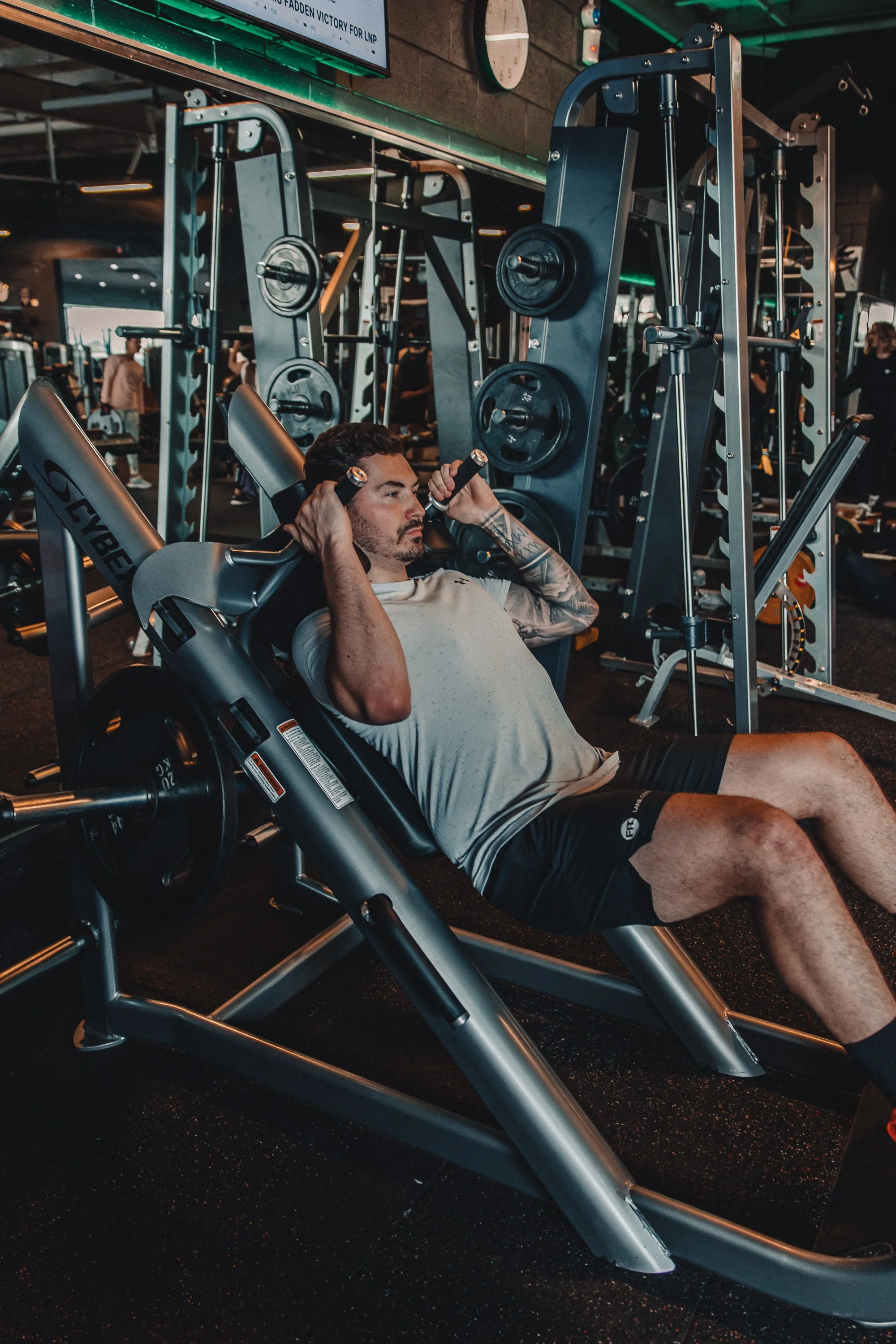
In a hack squat, you stand on a platform with your shoulders and back against pads. The movement involves lowering the body by bending at the knees and hips until the thighs are parallel to the ground or lower, then returning to the starting position by extending the legs.
Importance of the Hack Squat
1. Isolation and Targeted Muscle Engagement:
The hack squat machine helps isolate the quadriceps, hamstrings and glutes more effectively than traditional squats.
2. Reduced Spinal Stress:
Unlike free-weight squats, the hack squat reduces stress on the spine and lower back. This makes it a practical option for those managing lower back fatigue or aiming to reduce overall spinal load.
3. Versatility and Adaptability:
Subtle changes in hack squat foot placement shift muscular emphasis. A lower stance increases quad demand. A higher stance engages more glute and hamstring contribution. A slightly wider position can recruit more adductors.
4. Controlled Movement and Safety:
The guided track reinforces alignment. It keeps the movement consistent and repeatable, which supports stronger mechanics over time.
For members refining their technique or progressing load under supervision, the hack squat provides structure without limiting intensity.
5. Progressive Overload:
The machine allows precise weight adjustments, making progressive overload simple. This is essential for muscle growth and strength development over time.
Hack Squat Benefits
The hack squat benefits go well beyond building bigger quads. Used properly, it strengthens the legs in a way that supports performance, balance and long-term progress.
1. Targeted Muscle Development:
Because the path is fixed, tension stays where it should, particularly through the quads. You’re not thinking about balance or bar position. You’re just driving through the legs. That focus tends to produce noticeable strength and size gains.
2. Muscle Hypertrophy:
With fewer stabilisation demands, you can push sets harder without losing control. That makes this movement effective during hypertrophy phases, when you’re deliberately chasing volume and muscular fatigue.
3. Joint-Friendly Exercise:
Compared to heavy free-weight squats, this variation reduces spinal demand while still challenging the legs. It allows hard sessions without unnecessary joint strain.
4. Improved Leg Strength:
Building powerful quads and glutes transforms the way you move and feel. Lunges feel more stable. Split squats feel stronger. Even traditional squats benefit from the direct leg strength developed here.
5. Enhanced Range of Motion and Flexibility:
The machine supports consistent depth. Training through a full range builds strength where it counts and improves movement quality over time.
6. Balanced Development:
Adjusting hack squat foot placement shifts emphasis between quads and glutes. Small changes allow more deliberate training.
7. Plateau Breaking and Muscle Confusion:
When barbell progress slows, this variation exposes weaknesses. Strengthen those, and the carryover follows.
Proper Hack Squat Technique
To execute the hack squat safely and effectively, follow these steps:
Setup:
Stand on the platform with your back against the pads and your shoulders securely positioned under the shoulder pads.
Place your feet shoulder-width apart or slightly wider on the platform, with toes angled slightly outward if comfortable.
Execution:
Lower under control by bending through the knees and hips together. Keep your chest tall and spine neutral as you descend.
Aim to reach at least parallel. If mobility allows, you can work slightly deeper without losing alignment. Drive back up through the midfoot, maintaining a steady tempo. Avoid bouncing at the bottom or rushing the ascent. Controlled repetitions build strength that lasts.
Safety Tips:
Keep your knees tracking in line with your toes throughout the movement.
Do not lock your knees at the top of the movement to maintain muscle tension and prevent strain.
If you want a quick setup check in the club, ask the team at our Lane Cove gym or Chatswood gym.
Hack Squat Exercise Variations
Here are several hack squat exercise variations to consider integrating into your fitness routine:
1. Narrow Stance Hack Squat:
Bring your feet slightly closer together on the platform. This increases quad demand, particularly through the outer sweep. It’s a strong option when your goal is direct quadriceps development.
2. Wide Stance Hack Squat:
Set your feet wider with toes slightly turned out. This position recruits more adductors and glutes while still loading the quads. It supports overall lower body strength and balance.
3. Sumo Hack Squat:
Adopt a very wide stance with toes angled outward. This variation places greater emphasis on the inner thighs and glutes, building strength through a different hip position.
4. Elevated Heel Hack Squat:
Elevate your heels slightly to increase knee flexion and depth potential. This shifts more load onto the quadriceps and allows you to train through a deeper range with control.
5. Single-Leg Hack Squat:
Train one leg at a time to address imbalances and improve unilateral strength. This variation builds stability and exposes asymmetries that bilateral work can mask.
6. Paused Reps Hack Squat:
Pause briefly at the bottom of each rep before driving upward. The added time under tension builds control and strength out of the most demanding position.
7. Negative Reps Hack Squat:
Slow the lowering phase to three to four seconds. Controlled eccentrics increase mechanical tension and reinforce strong positioning under load.
8. Pulse Hack Squat:
Add small pulses in the bottom range before standing fully. This keeps tension high and challenges muscular endurance.
9. Smith Machine Hack Squat:
If the machine is unavailable, a Smith machine setup can replicate a similar pattern. It provides structure while allowing a slightly different resistance profile.
Common Hack Squat Mistakes
The hack squat is structured, but poor mechanics still limit results. Clean execution matters. Below are the most common errors and how to correct them.
1. Incorrect Foot Placement:
Mistake: Placing your feet too high or too low on the platform can lead to improper muscle engagement and potential injury.
Correction: Position your feet shoulder-width apart or slightly wider, ensuring they are centred and stable on the platform. Toes should point slightly outward to allow for a natural movement pattern.
2. Incomplete Range of Motion:
Mistake: Not going through a full range of motion by not descending low enough or not fully extending your legs at the top of the movement.
Correction: Lower yourself until your thighs are parallel to the ground or lower, ensuring a deep squat. Then, fully extend your legs at the top of the movement, avoiding locked knees.
3. Improper Spinal Alignment:
Mistake: Arching or rounding your back during the movement can strain the spine and increase the risk of back injury.
Correction: Maintain a neutral spine throughout the exercise. Keep your chest up, shoulders back and engage your core to support a straight back.
4. Knees Overextending or Collapsing:
Mistake: Allowing your knees to collapse inward during the movement can strain the joint and reduce force output.
Correction: Keep your knees aligned with your feet. Maintain proper tracking and alignment to prevent undue stress on the knees.
5. Lifting Too Heavy or Using Momentum:
Mistake: Trying to lift excessive weight or using momentum to perform the hack squat compromises form and reduces the effectiveness of the exercise.
Correction: Choose an appropriate weight that allows you to maintain proper form throughout the movement. Focus on controlled, deliberate repetitions to engage the targeted muscle groups effectively.
6. Neglecting Warm-up Sets:
Mistake: Skipping warm-up sets can lead to inadequate muscle preparation, increasing the risk of injury during the hack squat.
Correction: Start with light warm-up sets to gradually prepare your muscles, joints and connective tissues for the heavier work ahead. Perform dynamic stretches and mobility exercises to enhance flexibility.
7. Ignoring Breathing Technique:
Mistake: Holding your breath or not coordinating your breathing can disrupt your performance and energy levels.
Correction: Inhale as you lower yourself into the squat and exhale as you push the weight back up to the starting position.
8. Lack of Mind-Muscle Connection:
Mistake: Mindlessly going through the hack squat without focusing on muscle engagement can limit the effectiveness of the exercise.
Correction: Focus on controlled contraction through the quadriceps and glutes during each repetition.
9. Skipping Proper Warm-Up and Cool Down:
Mistake: Neglecting a proper warm-up or cool-down can increase the risk of injury and impede recovery.
Correction: Begin your workout with dynamic stretches and warm-up sets. After completing the hack squat session, perform static stretches to aid in muscle recovery and flexibility.
Prefer some hands-on guidance? Our personal training services can help you refine your form and progress safely.
Hack squat alternatives
If the machine is in use or the position does not suit you, several effective hack squat alternatives train similar muscle groups. The goal remains the same: strong quads, stable knees and controlled depth.
- Leg press
Similar knee mechanics with strong quad emphasis. Allows heavy loading with back support. - Belt squat
Loads the legs without spinal compression. A strong option when managing lower back fatigue. - Front squat
Upright torso and high quad demand. Builds strength that carries directly into compound lifts. - Goblet squat
Accessible and effective for refining depth and control. - Bulgarian split squat
Unilateral strength and balance. Exposes asymmetries quickly. - Smith machine squat
Guided bar path with controlled loading. Useful when working on positioning. - Sissy squat
High quad isolation through deep knee flexion. Best used as accessory work.
Each variation shifts the stimulus slightly. Choose based on your goal, your training phase and how your body is responding that week.
How does the hack squat compare to other leg exercises?
The hack squat suits focused quad loading with structure and repeatability. It allows heavy leg training without the balance demands of free weights.
Hack squat vs leg press
The main difference is torso position. The hack squat keeps you more upright and closer to a squat pattern, while the leg press shifts you further into hip flexion.
Other key differences:
- Hack squats place more direct demand on knee extension.
- Leg press usually allows a heavier total load.
- Hack squat transfers well to barbell squats.
- Leg press reduces technical demand.
Choose the hack squat for quad strength and squat carryover. Choose the leg press for higher-volume loading with less technical focus.
Hack squat vs V squat
The V squat follows a slightly freer movement arc. The hack squat runs on a more fixed track.
Other key differences:
- The hack squat offers greater movement consistency.
- A V squat may feel more natural through the hips.
- Hack squat typically increases quad isolation.
- A V squat can involve more posterior chain.
Select based on positioning and training goal.
Hack squat vs pendulum squat
The pendulum squat increases resistance in the bottom range. The hack squat distributes load more evenly throughout.
Other key differences:
- The pendulum emphasises deep knee flexion strength.
- The hack squat is easier to progress incrementally.
- The pendulum can feel more demanding out of the bottom.
- The hack squat provides greater overall stability.
Use the pendulum to overload the bottom range. Use the hack squat for controlled, repeatable progression.
Incorporating Hack Squats into Your Routine
To maximise hack squat benefits, program it deliberately. Aim for 3–4 sets of 8–12 controlled reps for most strength and hypertrophy phases. Select a load that challenges you without compromising depth or alignment.
Place the hack squat early in your lower body session if leg strength is the priority. Pair it with unilateral work, hip hinges and mobility to maintain balance across the week.
Progress load gradually. Keep execution consistent. Strength built this way holds up over time.
FAQs on Hack Squats
Are hack squats bad for your knees?
No, not when performed with proper alignment and appropriate load. Knee discomfort usually comes from poor tracking, excessive weight or limited mobility, not the movement itself.
How deep should I go on a hack squat?
Aim for at least parallel. Go deeper if you can maintain control and keep your lower back stable against the pad. Depth should not compromise alignment.
Why do hack squats feel harder than squats?
The fixed path reduces stabilisation demands and increases direct quad tension. There is less room to shift the load elsewhere, so the legs do more of the work.
Are hack squats beginner-friendly?
Yes. The guided track provides structure, which makes it easier to learn controlled knee and hip movement before progressing to heavier free-weight patterns.
What is a good weight for a hack squat?
A good starting weight allows 8–12 controlled reps with 1–2 reps left in reserve. Progress gradually once depth and tempo remain consistent.
Where should my feet go to target quads more?
Lower on the platform with a moderate stance. This hack squat foot placement increases knee flexion and quad demand while keeping the movement stable.
Hack squat vs squat – do I need both?
In the hack squat vs squat comparison, both serve a purpose. Barbell squats build total-body coordination. The hack squat isolates and overloads the legs. Used together, they complement each other.
Are hack squats better than leg presses?
Neither is better in isolation. The hack squat more closely resembles a squat pattern, while the leg press allows heavier loading with less technical demand. Choose based on your goal.
Ready to train legs with intention?
If you want to integrate the hack squat into a structured program, you can join online or submit an enquiry through our membership team.
To experience the full training environment, visit our Lane Cove gym or Chatswood gym and see how we approach strength, recovery and long-term performance.