Protein gets plenty of attention. Fibre is easier to overlook, even though it is built into many familiar foods.
Dietary fibre comes from plant foods and resists digestion in the small intestine. Some forms are then fermented in the large intestine. Australian nutrient guidance recognises its role in normal gut function and sets adequate-intake levels by age, sex and life stage.
The phrase "fibre gap" describes a common food pattern. It cannot diagnose an individual. Australia's latest national food-group analysis found that only 4.3% of people met the recommended intake for vegetables, legumes and beans. Less than one quarter of the grain and cereal foods consumed were wholegrain or high-fibre varieties, despite guidance that these choices should make up at least two-thirds. These figures do not directly measure each person's fibre intake. They do show that many meals leave little room for the foods that usually supply it.
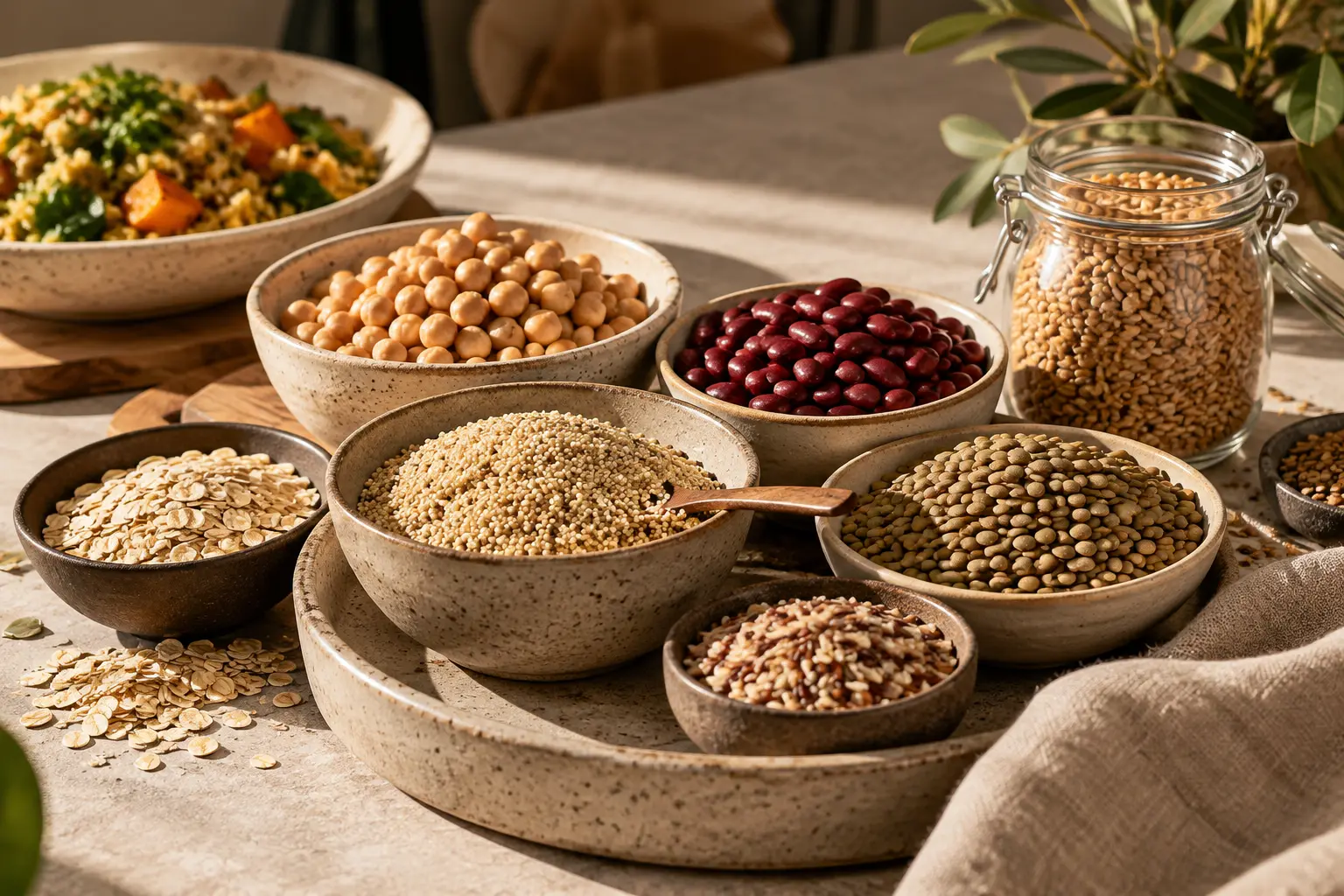
Whole grains, legumes, vegetables, fruit, nuts and seeds contain different forms of fibre, along with their own textures and nutrients. Official guidance therefore talks about food sources as well as daily amounts. The World Health Organisation recommends that carbohydrate foods come mainly from whole grains, vegetables, fruits and pulses.
Lunch does not need to become a calculation. A useful change is to create more chances for plant foods to show up. That might mean a mixed-grain base with legumes and vegetables, or overnight oats with fruit, chia and linseed.
A person's fibre intake is shaped across the whole day and week. Our FIT Food bowlssimply make fibre-rich foods easier to include. The direction is clear: use real ingredients, include several plant foods and let them form part of the meal from the start.