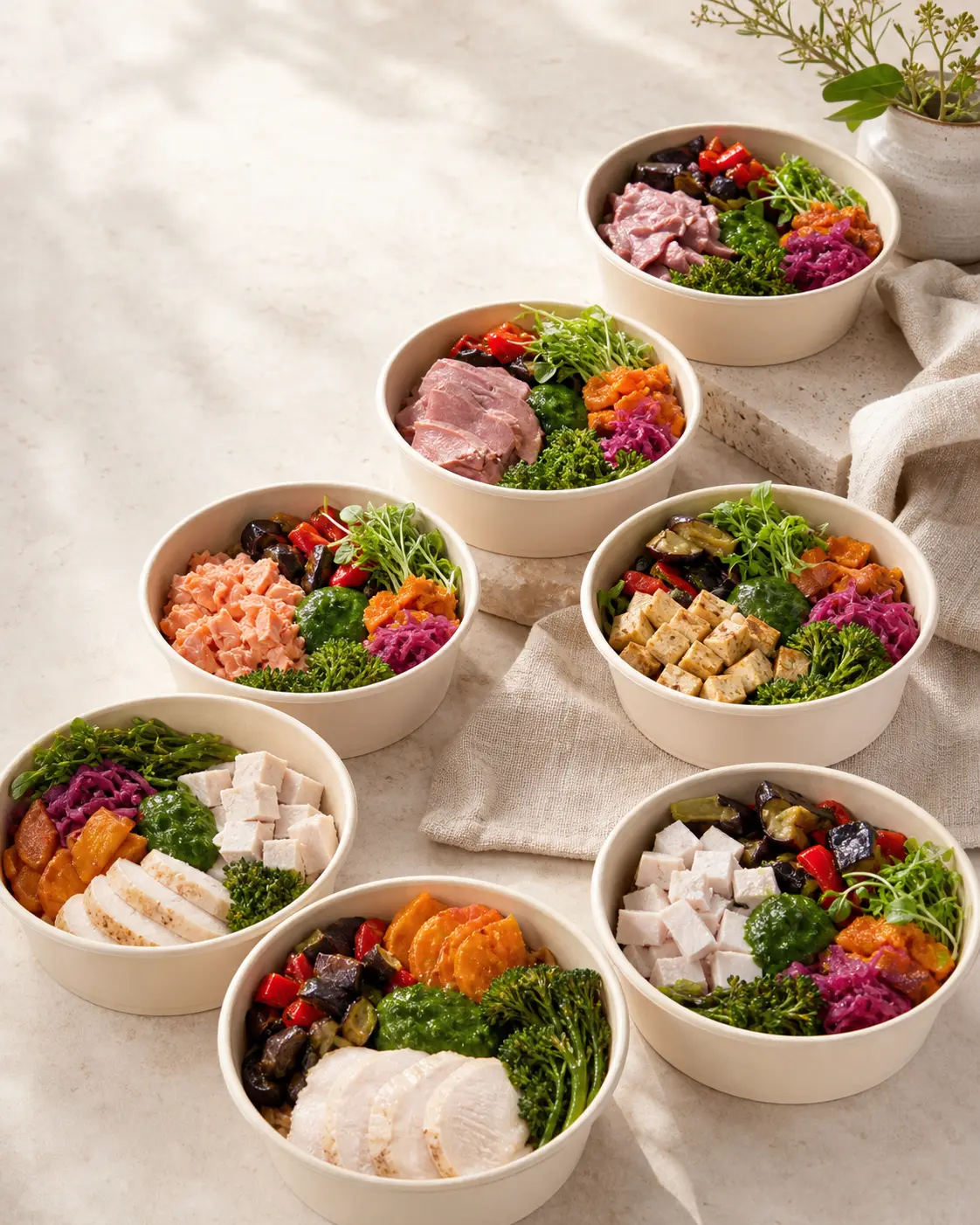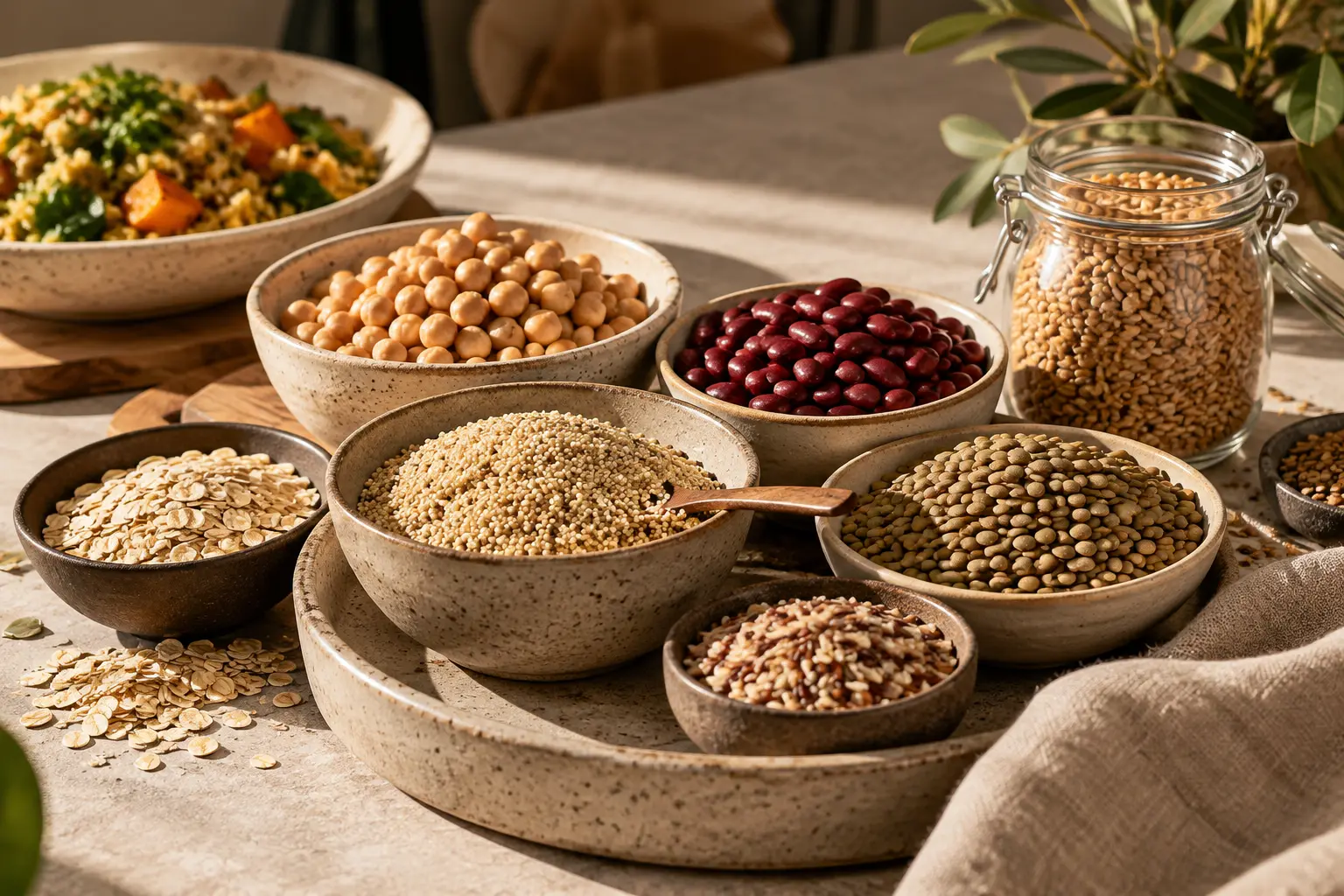
Inside the FIT FOOD seven-grain base, and what the science says about mixing it up.
Seven is the number in our FIT FOOD recipe. Nutrition science has no magic attached to it. What makes the base work is the mix: different grains and legumes, each with its own texture, shape and plant goodness, all in one bowl.
Variety is the principle, not the number
Health guidelines keep coming back to one word, and that word is variety. The World Health Organisation lists diversity as a core principle of a healthy diet. It recommends getting most of your carbohydrates from whole grains, vegetables, fruits and pulses [1]. Australia’s Dietary Guidelines say much the same. They encourage eating a wide range of foods and suggest choosing mostly wholegrain or higher-fibre options from the grain group [2].
So a mixed-grain base isn’t a trend. It’s an easy way to follow advice that has been around for a long time.
What the gut research shows (and what it doesn’t)
There’s growing interest in how plant variety might affect gut health, and the early findings are encouraging. The American Gut Project, a large citizen-science study, found that people who reported eating more types of plants tended to have more diverse gut microbes and stool metabolites [3].
That finding needs some context. The study was observational and relied partly on what participants said they ate. It shows an association. It can’t prove that eating a set number of plants each week leads to a particular health outcome.
Controlled trials paint a similarly measured picture. In one six-week randomised trial, swapping refined grains for whole grains led to modest changes in some gut bacteria and immune markers [4]. The results were interesting but not dramatic, and they don’t make any single grain essential.
In short, variety is a sensible habit backed by good guidance. It isn’t a shortcut or a cure-all.
Why we built the bowl this way
For FIT FOOD, the seven-grain base was a cooking decision first. It gives the bowl bite, and it makes a better foundation for the vegetables, protein and sauce on top. Legumes add another texture and another plant source. Using a mix also means no single fashionable ingredient has to carry the whole meal.
The result is variety built into an ordinary lunch, with no counting or tracking needed. Each ingredient brings something different, and together they make a bowl that feels more complete and more satisfying.
Make variety a habit
You don’t need a perfect plan to eat a wider range of plant foods. Small swaps add up, like mixing your grains, adding a handful of legumes or trying a vegetable you don’t usually buy. Next time you’re at the club, grab a FIT FOOD bowl after your session. If you’d like help building variety into your week, have a chat with our team.
References
- World Health Organization. Healthy diet.
- Eat For Health. Grain foods, mostly wholegrain and/or high cereal fibre varieties.
- McDonald D et al. American Gut: an Open Platform for Citizen Science Microbiome Research. mSystems. 2018.
- Vanegas SM et al. Substituting whole grains for refined grains in a 6-wk randomized trial has a modest effect on gut microbiota and immune and inflammatory markers of healthy adults. American Journal of Clinical Nutrition. 2017.